10 art styles for AI video, with prompts
Watercolour, stained glass, neon, ink and six more art styles for AI video. Each has the full prompt that made it, ready to copy, and the style paragraph to save as your own.
Ten art styles, each on a creature and a scene of its own: a fox in watercolour, a peacock in stained glass, a great wave as a woodblock print. Each is below with the full prompt that made its clip. Copy one, swap in your own subject and keep the style.
The 10 styles
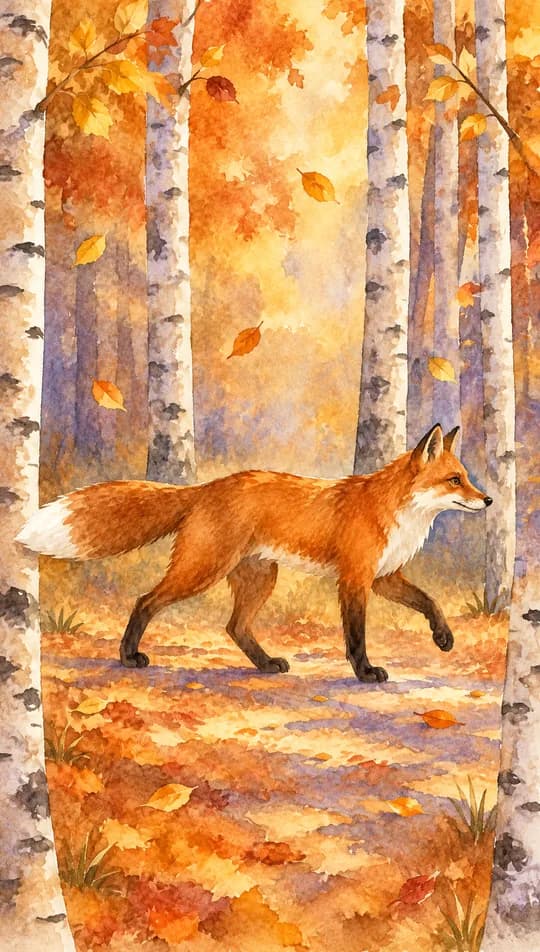
1. Watercolour
Wet washes that bleed at the edges, loose brushwork and white paper left for the highlights. It suits gentle stories, nature and anything handmade.
Built in to TurboClip as #watercolor.
Make a 5-second vertical video clip (9:16) with TurboClip.

A red fox trots from left to right along a path through a birch wood, seen side-on, one forepaw lifted, its brush of a tail held level behind it. Slender birch trunks stand behind it and at the edges of the frame, and a few leaves fall through the air. The fox trots steadily from left to right through the birch wood, a light, even trot, its tail level behind it. The camera tracks sideways with it at its pace, so the fox stays in the middle of the frame while the birch trunks slide past from right to left. Leaves drift down through the air.

World: An autumn birch wood in late-afternoon sun. Burnt-orange and gold washes of leaves overhead and a carpet of fallen leaves underfoot, white birch trunks with dark flecks, soft violet-blue shadows, and the white of the paper left bare toward the edges. The fox is a rich russet orange with a white chest and tail tip and dark legs. A warm palette of burnt orange, gold and cream, in saturated washes, not pale ones.

Style: Traditional watercolor painting aesthetic. Wet-on-wet blending, organic pigment bleeding at edges, visible cold-pressed paper texture, loose confident brushwork that preserves white paper highlights. Soft pastel washes, a gentle glow and rounded shapes when the subject is tender. Implied dimensional depth through value washes rather than rendered lighting. The medium's signature is softness, organic edge bleeding, and handmade texture — the image should feel painted, not rendered, and calm.

No text, captions, lettering, logos or watermarks.
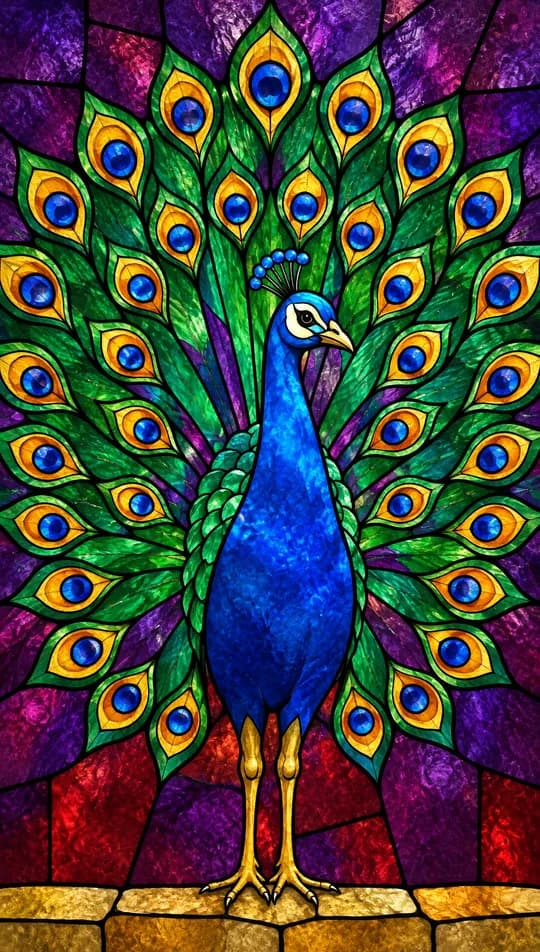
2. Stained Glass
Pieces of jewel-coloured glass held in thick black lead lines, with light shining through from behind. It suits bold, symbolic subjects and grand reveals.
Not built in yet. Save it as a style of your own with the style paragraph under the prompt.
Make a 5-second vertical video clip (9:16) with TurboClip.

A peacock stands facing us, its head turned a little to the right, with its tail fanned wide open behind it like a rose window, every eye-feather a separate shape. Its feet rest on a low stone ledge at the bottom of the frame. The peacock slowly turns its head from right to left and back, and its fanned tail shivers, the feathers rippling from the middle outwards. The sunlight behind the window brightens and shifts, so the colours of the glass glow and a soft light plays across the panes. The camera is still.

World: A tall church window filled from edge to edge with glass. The peacock's body in sapphire blue, its tail in emerald green and violet with gold and amber eyes, the ground behind it in deep violet and ruby panes, all held in thick black lead lines, with sunlight pouring through so the colours glow. A palette of sapphire, emerald and violet with gold, against black lines.

Style: Stained-glass window aesthetic. Everything is built from pieces of coloured glass held in thick black lead lines: bold simple shapes, each piece one jewel colour with the slight streaks, bubbles and ripples of hand-made glass. Light shines through from behind, so the colours glow and the leading reads as a strong black drawing. No painted shading beyond a little dark tracery line on the glass. The medium's signature is luminous, saturated colour and graphic black line — whatever the subject, it should look like a real leaded window lit by the sun.

No text, captions, lettering, logos or watermarks.
Stained-glass window aesthetic. Everything is built from pieces of coloured glass held in thick black lead lines: bold simple shapes, each piece one jewel colour with the slight streaks, bubbles and ripples of hand-made glass. Light shines through from behind, so the colours glow and the leading reads as a strong black drawing. No painted shading beyond a little dark tracery line on the glass. The medium's signature is luminous, saturated colour and graphic black line — whatever the subject, it should look like a real leaded window lit by the sun.
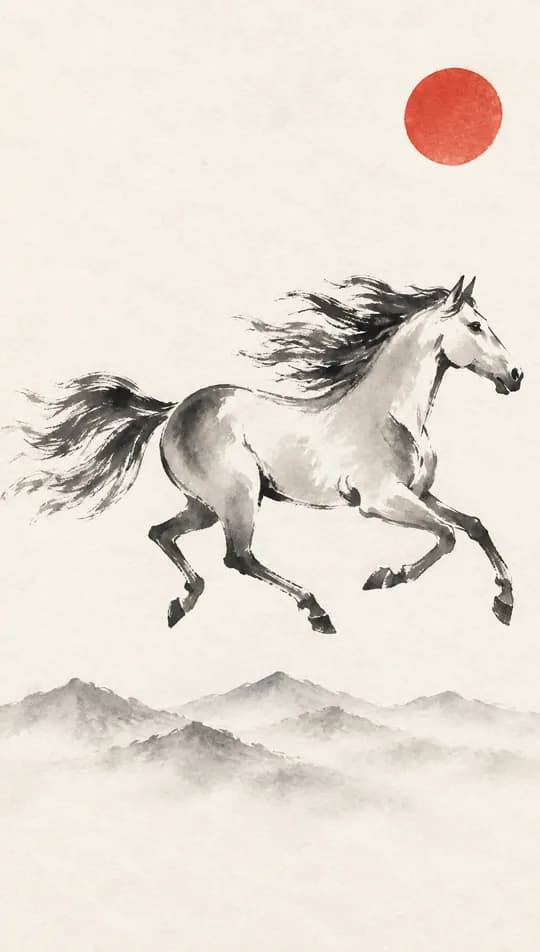
3. Sumi-e Ink
Black ink on rice paper: a few confident brushstrokes, soft grey washes and a lot of empty space. It suits calm, minimal pieces and motion caught in a single gesture.
Not built in yet. Save it as a style of your own with the style paragraph under the prompt.
Make a 5-second vertical video clip (9:16) with TurboClip.

A horse gallops from left to right, seen side-on, all four hooves off the ground, its mane and tail streaming out behind it. Low in the distance is a line of misty mountains, and high on the right is the round disc of the sun. The horse gallops from left to right at full stretch, its legs gathering and reaching, its mane and tail streaming behind it as flying strokes of ink. The camera tracks sideways with it, so the horse stays in the middle of the frame while the misty mountains drift slowly past. Faint mist moves across the paper.

World: Bare off-white rice paper, most of it left empty, with faint grey mist round the distant mountains. The horse in black ink and soft grey washes, its mane and tail as flying dry-brush strokes. The sun is one flat disc of vermilion red, the only colour in the picture. A palette of white, black and one red. No seal stamps, no calligraphy, no signature.

Style: Sumi-e ink wash painting aesthetic. Black ink on absorbent off-white rice paper: a few confident brushstrokes that swell and taper, dry-brush streaks where the brush runs out, soft grey washes that bleed into the paper, and large areas left empty. Forms are suggested, never outlined or filled in. One small accent of vermilion red is the only colour. The medium's signature is economy and breath — the fewest strokes that carry the subject's life, and empty paper that reads as air and mist.

No text, captions, lettering, logos or watermarks.
Sumi-e ink wash painting aesthetic. Black ink on absorbent off-white rice paper: a few confident brushstrokes that swell and taper, dry-brush streaks where the brush runs out, soft grey washes that bleed into the paper, and large areas left empty. Forms are suggested, never outlined or filled in. One small accent of vermilion red is the only colour. The medium's signature is economy and breath — the fewest strokes that carry the subject's life, and empty paper that reads as air and mist.
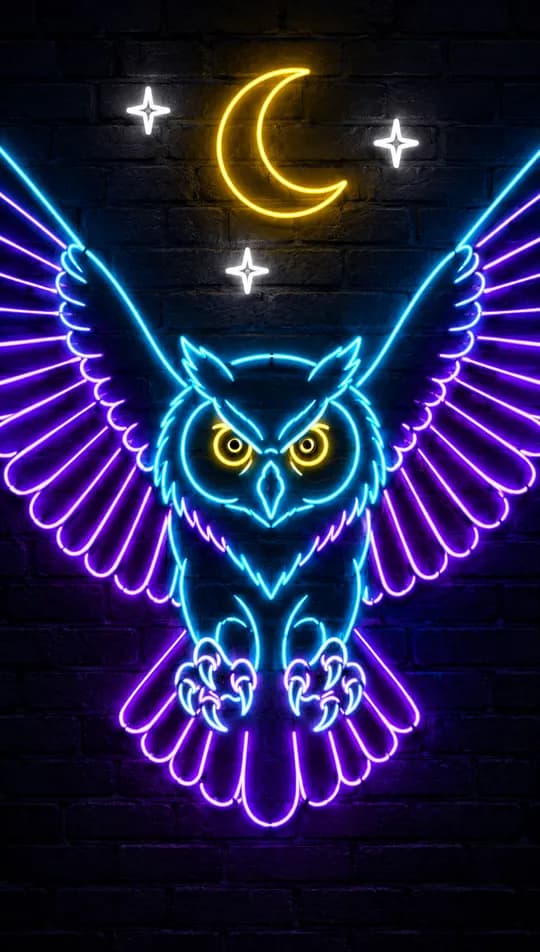
4. Neon Sign
Everything is drawn in glowing glass tubes on a dark wall, each tube one saturated colour. It suits nightlife, music and anything that should glow.
Not built in yet. Save it as a style of your own with the style paragraph under the prompt.
Make a 5-second vertical video clip (9:16) with TurboClip.

An owl in flight, seen from the front, flying straight toward us with its wings spread wide and its talons reaching forward. Above it are a crescent moon and a few small stars. The neon owl flaps its wings slowly, twice, the glowing tubes of its wings sweeping down and up while its body stays where it is. Its yellow eyes blink once. The tubes flicker now and then, as old neon does, and the moon and stars pulse softly. The camera is still.

World: A night-dark wall of near-black brick, lit only by the sign. The owl drawn in electric cyan and violet tubes, its two eyes in bright yellow rings, the crescent moon in yellow and the stars in white, each tube spilling a soft bloom of its own colour onto the bricks. A palette of cyan, violet and yellow light on black. No lettering, no words.

Style: Neon sign aesthetic. Everything is drawn in bent glass tubes of glowing neon light mounted on a dark wall: continuous single-weight lines with rounded ends, small gaps where a tube turns back, and the tubes' supports and wiring just visible. Each tube is one saturated colour with a white-hot core and a soft bloom of coloured light spilling onto the wall. No fills, no shading — only lines of light. The medium's signature is glow against darkness: electric, clean and graphic.

No text, captions, lettering, logos or watermarks.
Neon sign aesthetic. Everything is drawn in bent glass tubes of glowing neon light mounted on a dark wall: continuous single-weight lines with rounded ends, small gaps where a tube turns back, and the tubes' supports and wiring just visible. Each tube is one saturated colour with a white-hot core and a soft bloom of coloured light spilling onto the wall. No fills, no shading — only lines of light. The medium's signature is glow against darkness: electric, clean and graphic.
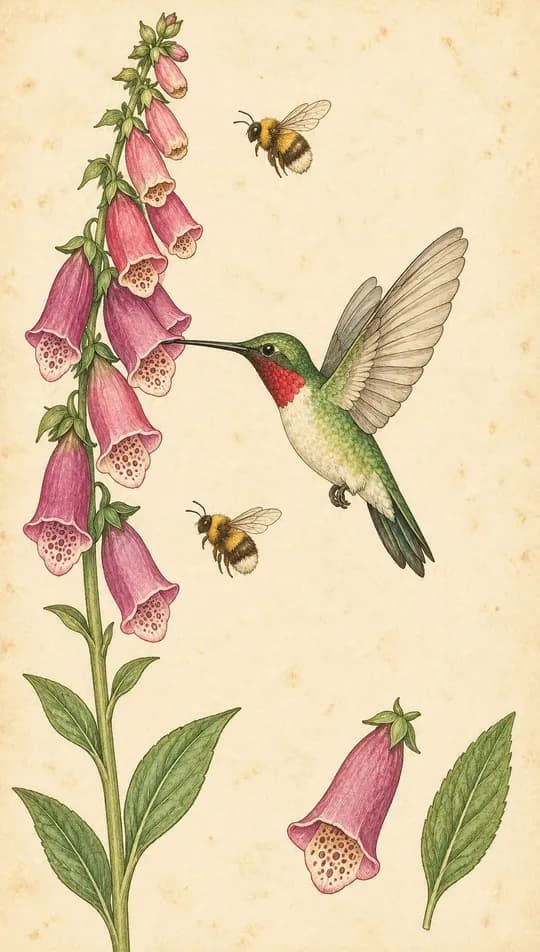
5. Botanical Plate
A plate from a naturalist's book: fine sepia outlines and delicate hand-tinted colour on aged cream paper. It suits nature, food and heritage brands.
Not built in yet. Save it as a style of your own with the style paragraph under the prompt.
Make a 5-second vertical video clip (9:16) with TurboClip.

A hummingbird hovers in the middle of the page, seen side-on and facing left, its wings raised, its long bill reaching into the open bell of a tall foxglove stem that rises from the bottom left. Two bumblebees fly near the flowers. At the lower right a single foxglove bell and a leaf are shown on their own, as separate specimens. The hummingbird hovers in place, its wings a fast blur, then dips its bill into one foxglove bell and draws back. The two bumblebees drift in small circles near the flowers, and the foxglove stem sways very slightly. The camera is still.

World: A page of aged cream paper with nothing behind the specimens. Foxglove bells in rose pink and magenta with speckled throats, stems and leaves in fresh leaf green, the hummingbird in emerald green with a ruby-red throat, the bees in gold and brown. A palette of cream, rose pink and leaf green. No labels, no handwriting, no numbers.

Style: Antique botanical illustration aesthetic, a plate from a naturalist's book. Fine sepia-ink outlines with delicate hand-tinted watercolour, every vein and petal observed precisely, on aged cream paper with faint foxing. Specimens are laid out clearly against the bare page with no background scenery and soft, shadowless light. The medium's signature is scientific delicacy: precise, calm and airy, with a lot of clean paper.

No text, captions, lettering, logos or watermarks.
Antique botanical illustration aesthetic, a plate from a naturalist's book. Fine sepia-ink outlines with delicate hand-tinted watercolour, every vein and petal observed precisely, on aged cream paper with faint foxing. Specimens are laid out clearly against the bare page with no background scenery and soft, shadowless light. The medium's signature is scientific delicacy: precise, calm and airy, with a lot of clean paper.
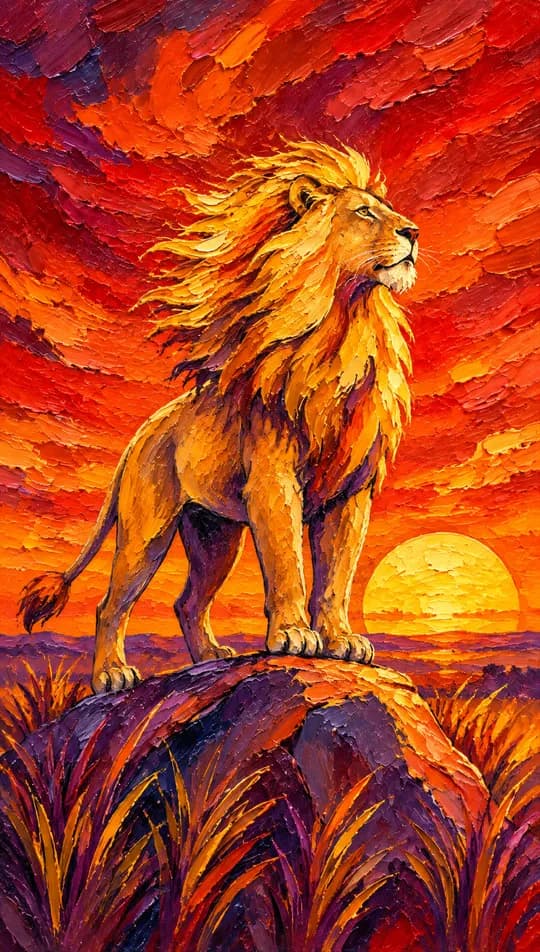
6. Impasto Oil
Thick oil paint laid on with a palette knife, every stroke standing up from the canvas. It suits dramatic subjects and big skies.
Not built in yet. Save it as a style of your own with the style paragraph under the prompt.
Make a 5-second vertical video clip (9:16) with TurboClip.

A male lion stands on a rock, seen in three-quarter view and facing right, his head raised and his great mane blown back by the wind. Tall grass grows round the rock, and the sun sits low in the sky behind him. The wind blows through the lion's mane and through the tall grass, which ripple as thick strokes of paint. The lion slowly lifts his head and turns it a little toward us. The strokes of the sunset sky drift and swirl slowly round the sun. The camera pushes in very slowly.

World: The savannah at sunset. A blazing sky of crimson, scarlet and orange strokes swirling round a low gold sun, the lion's mane in thick gold and amber, deep violet shadows in the rock and the grass. A palette of crimson, gold and violet.

Style: Impasto oil painting aesthetic. Thick paint laid on with a palette knife and a loaded brush, so every stroke stands up from the canvas and catches the light: ridges, swirls and broken dabs of pure colour set side by side rather than blended. Forms are built from the direction of the strokes; skies swirl, and fur, grass and water follow their own flow. Saturated, expressive colour with strong complementary contrasts. The medium's signature is energy and texture — the paint itself is alive.

No text, captions, lettering, logos or watermarks.
Impasto oil painting aesthetic. Thick paint laid on with a palette knife and a loaded brush, so every stroke stands up from the canvas and catches the light: ridges, swirls and broken dabs of pure colour set side by side rather than blended. Forms are built from the direction of the strokes; skies swirl, and fur, grass and water follow their own flow. Saturated, expressive colour with strong complementary contrasts. The medium's signature is energy and texture — the paint itself is alive.
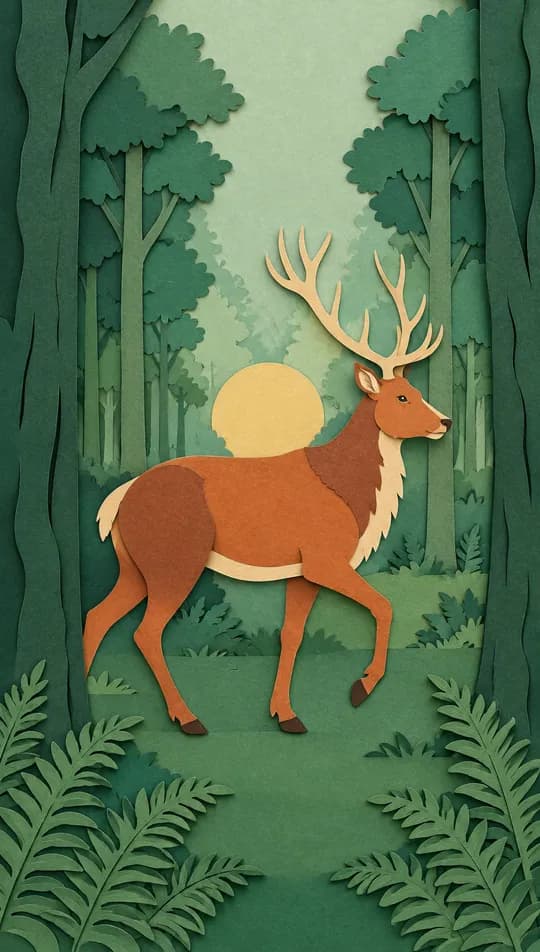
7. Paper Cut
Layers of cut coloured paper with real depth between them, like a lit shadow box. It suits fairy tales, title sequences and layered scenes.
Not built in yet. Save it as a style of your own with the style paragraph under the prompt.
Make a 5-second vertical video clip (9:16) with TurboClip.

A stag with tall antlers walks from left to right through a forest, seen side-on, one foreleg lifted. Big tree trunks and ferns stand close to us at both edges of the frame, more trees stand behind the stag in rows that fade into the distance, and a round sun sits low behind it. The paper stag walks slowly from left to right, lifting each leg in turn. The camera tracks sideways with it, so the stag stays in the middle of the frame while the layers of paper trees slide past one another, the nearest fastest and the farthest slowest. A few paper leaves flutter down.

World: A forest made of layers of green paper: deep forest green nearest to us, then emerald, then mint and pale sage far away, with a pale gold paper sun. The stag is built from layers of paper too, not one flat shape: a russet-orange body, a darker copper neck, shoulder and haunch laid over it, a cream chest, belly and tail, dark brown hooves, and tall antlers in pale gold, each piece casting a soft shadow on the one beneath. Each layer of the forest casts a soft shadow on the one behind. A palette of greens with russet orange, cream and pale gold.

Style: Layered paper-cut aesthetic. Everything is cut from sheets of coloured paper and stacked in layers with real depth between them: clean scalpel-cut edges, flat matte colour, and a soft shadow cast by each layer onto the one behind, as in a lit shadow box. Shapes are simple and silhouetted; detail comes from cut-outs and overlaps, never from drawn lines. The medium's signature is depth made from flat paper — crisp layers, soft shadows, a handmade diorama.

No text, captions, lettering, logos or watermarks.
Layered paper-cut aesthetic. Everything is cut from sheets of coloured paper and stacked in layers with real depth between them: clean scalpel-cut edges, flat matte colour, and a soft shadow cast by each layer onto the one behind, as in a lit shadow box. Shapes are simple and silhouetted; detail comes from cut-outs and overlaps, never from drawn lines. The medium's signature is depth made from flat paper — crisp layers, soft shadows, a handmade diorama.
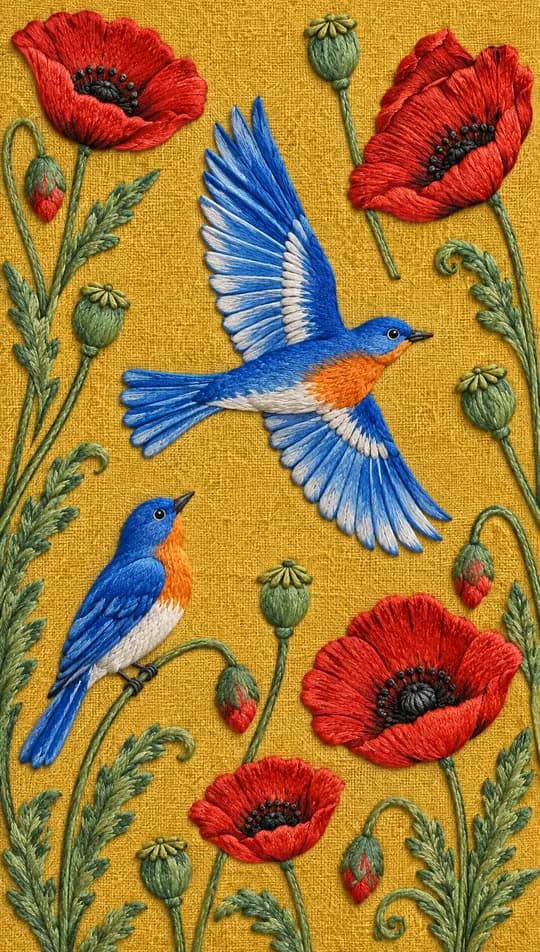
8. Embroidery
Stitched in glossy thread on woven linen, with the stitches following each shape. It suits craft, fashion and cottage-warm stories.
Not built in yet. Save it as a style of your own with the style paragraph under the prompt.
Make a 5-second vertical video clip (9:16) with TurboClip.

Two bluebirds among tall poppies. One flies in the middle of the frame with its wings open, seen side-on and facing right; the other perches on a poppy stem at the lower left and looks up at it. Poppy flowers, seed heads and curling leaves fill the frame round them. The flying bluebird beats its stitched wings and hovers in place, rising and dipping a little, while the perched bluebird tilts its head and flicks its tail. The poppies sway gently on their stems. The camera is still.

World: Mustard-yellow linen from edge to edge, its weave showing. The bluebirds in cobalt blue and white thread with orange breasts, scarlet poppies with black knotted centres, stems and leaves in sage green. A palette of mustard yellow, scarlet and cobalt blue. No embroidery hoop, no needle, no loose threads.

Style: Hand embroidery aesthetic. Everything is stitched in glossy cotton thread on woven linen: satin stitch laid side by side in filled shapes, long-and-short stitch shading, chain-stitch outlines and French knots for dots, with the direction of the stitches following each form. The weave of the cloth shows between the shapes, and the thread catches the light with a soft sheen and a slight raised shadow. The medium's signature is handmade texture and patience — every colour is thread, and nothing is printed or painted.

No text, captions, lettering, logos or watermarks.
Hand embroidery aesthetic. Everything is stitched in glossy cotton thread on woven linen: satin stitch laid side by side in filled shapes, long-and-short stitch shading, chain-stitch outlines and French knots for dots, with the direction of the stitches following each form. The weave of the cloth shows between the shapes, and the thread catches the light with a soft sheen and a slight raised shadow. The medium's signature is handmade texture and patience — every colour is thread, and nothing is printed or painted.
9. Graffiti
Spray paint on a brick wall: bold black outlines, airbrushed fades, drips and overspray. It suits music, streetwear and anything with attitude.
Not built in yet. Save it as a style of your own with the style paragraph under the prompt.
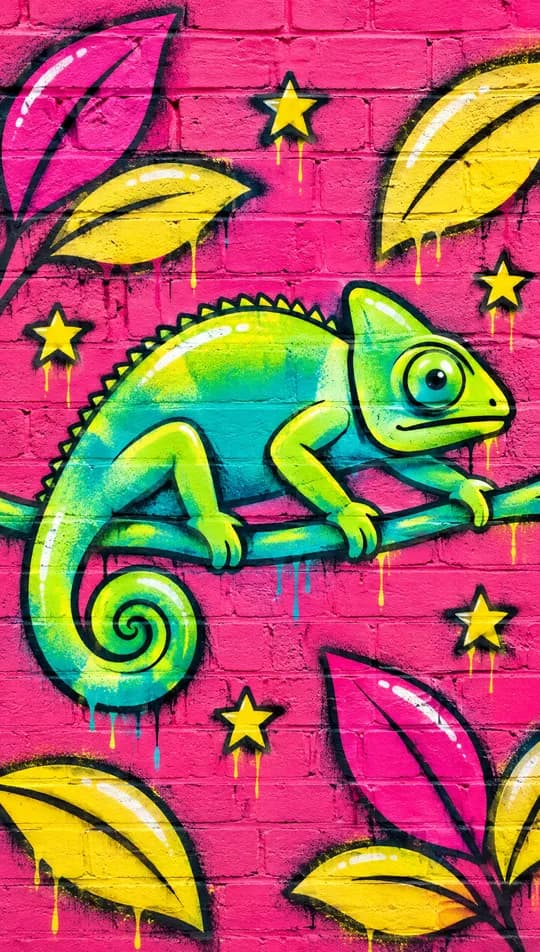
Make a 5-second vertical video clip (9:16) with TurboClip.

A chameleon climbs along a branch from left to right, seen side-on, its tail curled into a spiral, one front foot reaching forward and its round eye turned toward us. Big simple leaves and a few five-pointed stars surround it. The painted chameleon creeps slowly along the branch from left to right, one foot at a time, and its round eye swivels to look about. Waves of colour ripple along its body, lime to turquoise and back. A few drips of paint run slowly down the wall. The camera is still.

World: A brick wall painted hot pink from edge to edge, the bricks and mortar lines showing through the paint. The chameleon in lime green and turquoise with yellow highlights and a thick black outline, the leaves in magenta and yellow, white shine marks, and drips of paint running down. A palette of hot pink, lime green and turquoise. No lettering, no tags, no words.

Style: Graffiti street-art mural aesthetic. Spray paint on a rough wall: bold black outlines, flat fills with soft airbrushed fades and highlights, overspray haze at the edges, drips running down from the wettest paint, and the wall's bricks and mortar lines showing through the colour. Big, punchy, cartoon-bold shapes in saturated colours with white shine marks. The medium's signature is loud, fast and handmade at scale — aerosol energy on a city wall.

No text, captions, lettering, logos or watermarks.
Graffiti street-art mural aesthetic. Spray paint on a rough wall: bold black outlines, flat fills with soft airbrushed fades and highlights, overspray haze at the edges, drips running down from the wettest paint, and the wall's bricks and mortar lines showing through the colour. Big, punchy, cartoon-bold shapes in saturated colours with white shine marks. The medium's signature is loud, fast and handmade at scale — aerosol energy on a city wall.
10. Woodblock Print
Flat colour inside crisp dark keylines, in the Japanese ukiyo-e tradition, with a hand-wiped fade in the sky. It suits landscapes, the sea and weather.
Not built in yet. Save it as a style of your own with the style paragraph under the prompt.
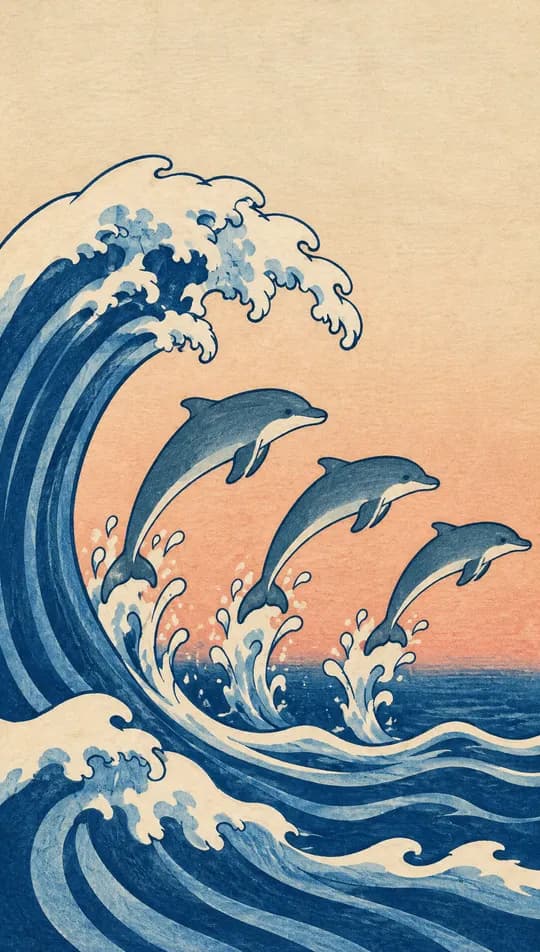
Make a 5-second vertical video clip (9:16) with TurboClip.

A great wave rises on the left and curls over toward the right, its crest breaking into claws of foam. Three dolphins leap out of the sea in an arc across the middle of the frame, from left to right, one behind another. Above them is an open sky. The great wave rolls forward and its crest curls over, the claws of foam reaching and falling. The three dolphins leap out of the sea one after another in an arc from left to right and dive back in with small splashes. The camera is still.

World: The open sea. Water in deep Prussian blue and pale blue with white foam, the dolphins in slate blue with pale bellies, and a sky of bare cream paper that fades to soft salmon pink at the horizon. A palette of Prussian blue, cream and white. No text, no title cartouche, no seal stamps.

Style: Japanese woodblock print aesthetic, in the ukiyo-e tradition. Flat areas of colour printed from carved blocks inside crisp dark keylines, with the gentle graduated fade of hand-wiped ink in the sky, the grain of the wood showing faintly in the colour, and soft cream handmade paper. Waves, clouds and spray are stylised into rhythmic patterns and claw-like curls. A limited palette printed in a few inks. The medium's signature is graphic rhythm and calm flatness — bold, decorative and instantly legible.

No text, captions, lettering, logos or watermarks.
Japanese woodblock print aesthetic, in the ukiyo-e tradition. Flat areas of colour printed from carved blocks inside crisp dark keylines, with the gentle graduated fade of hand-wiped ink in the sky, the grain of the wood showing faintly in the colour, and soft cream handmade paper. Waves, clouds and spray are stylised into rhythmic patterns and claw-like curls. A limited palette printed in a few inks. The medium's signature is graphic rhythm and calm flatness — bold, decorative and instantly legible.
Three ways to use a style
In Director, for a whole video
Director turns one idea into a finished video. It writes the script, plans every shot and voices it, and you approve the plan before anything renders.
- Open Director and describe your video.
- Press Style and pick the look by its tag, such as
#watercolor, or a style you saved. - Approve the plan. Every scene is made in that style.
The Watercolour button on this page opens Director with the style already picked.
In Create video, for one clip
For a single short clip, like the ones in the Reel, use Create video. Paste a whole prompt from this page, pick a video model and generate. Or type only your scene and choose the look with the Style button there.
In Claude, ChatGPT or another assistant
Connect TurboClip once, then paste a prompt into the chat. The assistant shows the price, then makes the clip. It works in Claude, ChatGPT, Codex, Cursor and any assistant that takes MCP connectors, and every clip in the Reel was made in a Claude chat.
Save a style of your own
A look that isn't built in takes a minute to add. After that it is in your Style picker for every video.
- In Director or Create video, press Style.
- Under Your styles, choose New style.
- Name it, such as
#stained-glass, and paste the style paragraph from this page. - Save it, then pick it like any built-in style.
For a one-off, choose Custom in the Style picker and paste the paragraph there.
Make a prompt your own
Each prompt has four parts:
- The opening line says what to make: a 5-second vertical clip. Change the length or the shape there.
- The scene is the first paragraph: who or what is in the shot, and what happens. Swap in yours.
- World is the place, the colours and the light. Keep ours, or describe your own.
- Style is the look itself. Keep it word for word.
The last line keeps words and logos out of the picture.
How the Reel's clips were made
Each clip began as a line sketch of its subject, so its size and pose were settled before any style went on. GPT Image 2.5 turned each sketch into a still picture in its style, and Omni 1.2 Flash then animated each picture for five seconds, all in a Claude chat with TurboClip connected.
Pasted as they are, the prompts above give the same look in one step. Your framing will differ a little from ours.
Questions & answers
Are these art styles built in to TurboClip?
Watercolour is, as #watercolor. The other nine are not yet, and each takes a minute to save as a style of your own: press Style, choose New style, and paste the style paragraph from this page.
Can I use these prompts in Claude or ChatGPT?
Yes, once TurboClip is connected. Paste a prompt into the chat and the assistant shows the price, then makes the clip with TurboClip.
Which AI models made the clips?
Each clip started as a still made with GPT Image 2.5, which Omni 1.2 Flash then animated for five seconds at 720p. The styles are written as plain descriptions, so they work with other image and video models too.
Can I use a style on my own subject?
Yes. Swap the first paragraph of the prompt for your own subject and what it does, and keep the Style paragraph word for word. World is the place, the colours and the light: keep ours, or describe your own.
Can I change the length or the shape of the clip?
Yes. The first line of each prompt asks for a 5-second vertical clip. Change it to what you need, such as a 10-second 16:9 clip. The lengths on offer depend on the video model.
What does a clip cost?
Each clip uses credits, and TurboClip shows the price before anything is made. The price depends on the video model, the length and the resolution, and every model's rate is on the pricing page.